
(Affiliate Disclosure: This post contains some affiliate links…)
Here’s the thing: I’ve tried many screen time app, website blocker, and digital wellness trick in the book. None of them stuck. Why? Because when you’re craving that dopamine hit from your phone, a few taps can bypass any software.
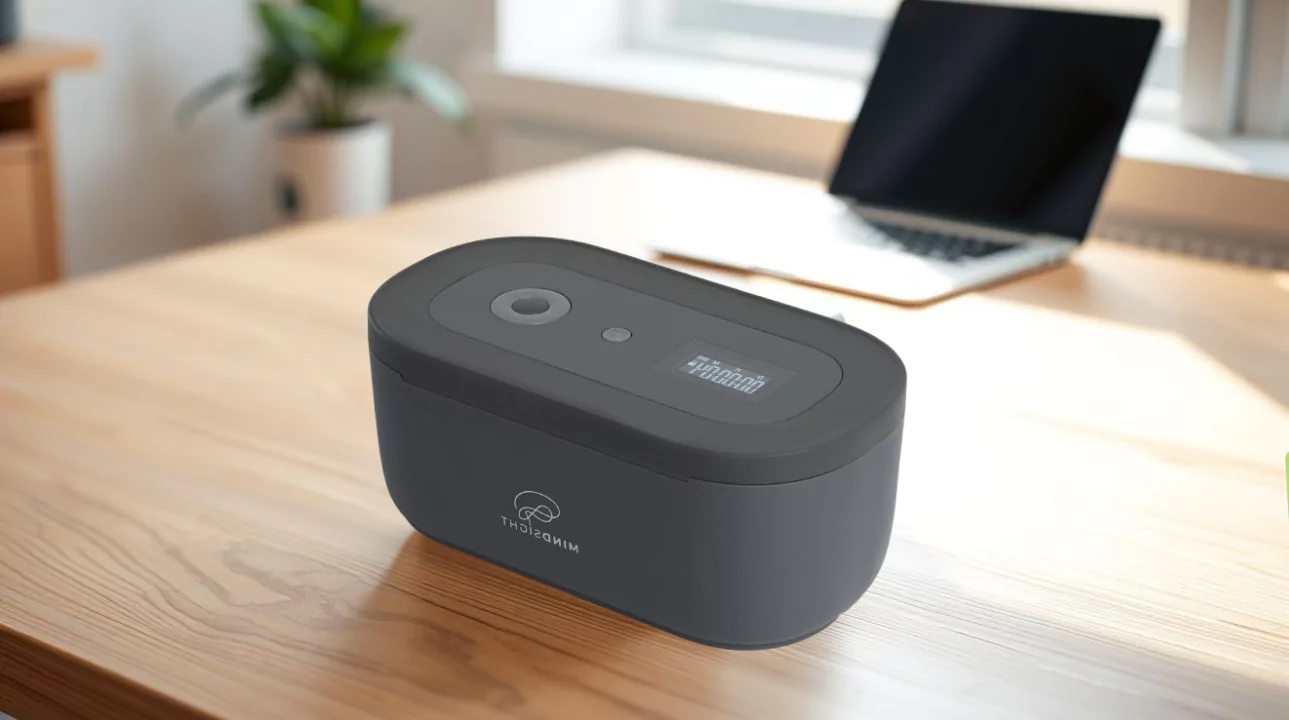
That’s what led me to the Mindsight Timed Lock Box. I needed something physical, something that couldn’t be outsmarted by my own weak willpower at 2 AM.
After 21 days of testing, here’s my genuine take. No sugar-coating, no brand-sponsored hype, just the truth about whether this plastic box can actually change your digital habits.
What I Got for $40
Let’s start with what’s actually in the box. The Mindsight arrives with the lock box itself (in that distinctive glacier gray color or block), two AA batteries, and a basic instruction manual. That’s it, no fancy packaging or unnecessary extras.
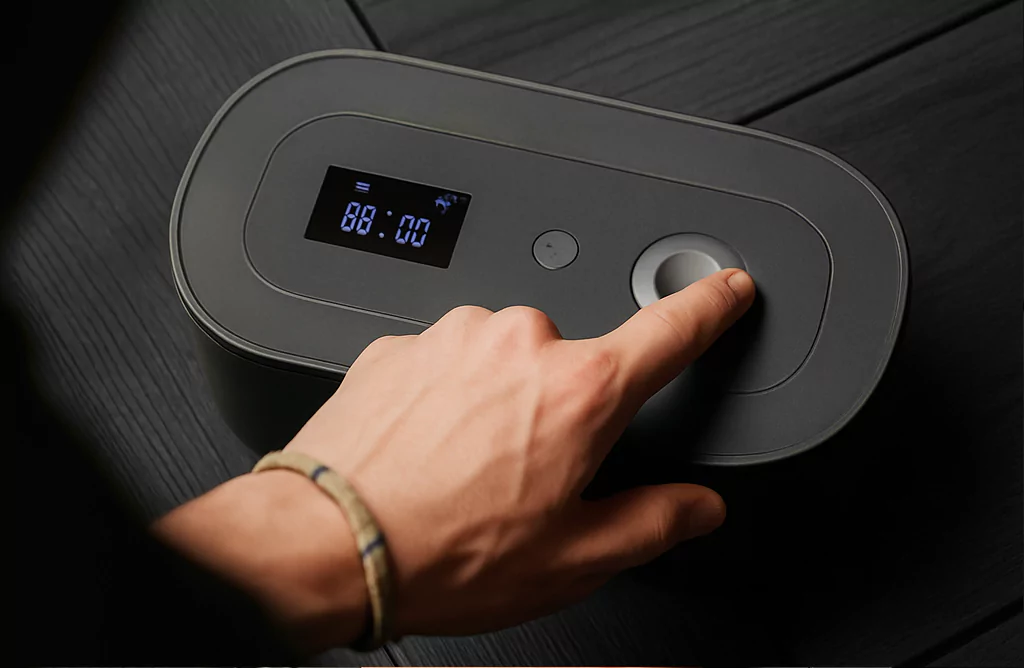
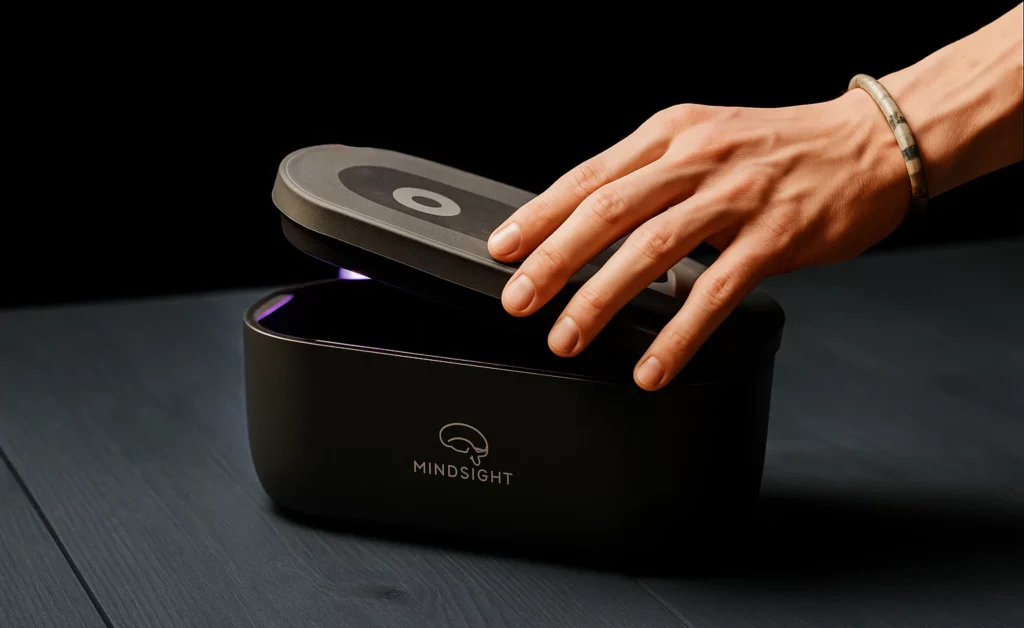
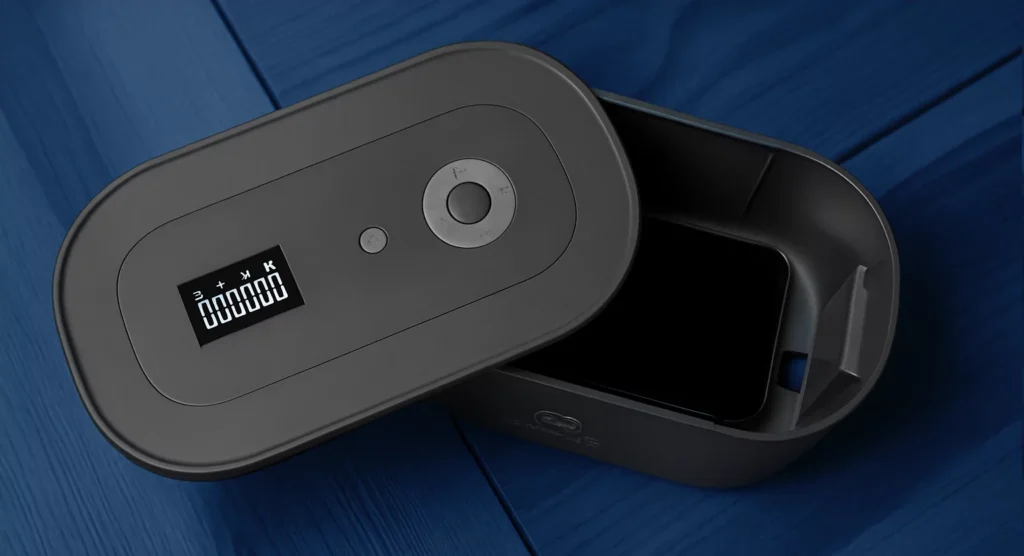
The build quality surprised me. For a plastic container, it feels solid. The dimensions are exactly as advertised: The digital display is clear and easy to read, even in dim lighting. The buttons have a satisfying click, and the lid closes with a reassuring snap. It doesn’t feel cheap.
Key Specs at a Glance:
- Price: Approx. $40 on Amazon
- Max Timer: Up to 10 days (240 hours)
- Battery Life: 6+ months (claimed, 2x AA batteries)
- Internal Size: 8″ x 2.75″ x 4.75″
- Emergency Unlocks: Yes (in Standard Mode), No (in Fortress Mode)
Week 1: The Honeymoon Phase
Day one was exciting. I set a 2-hour timer, locked my phone away, and felt immediately productive. The opaque design works exactly as intended – out of sight, out of mind.
I tested all three modes during the first week:
Lockbox Mode (manual): Simple manual lock with no timer. Perfect for creating a designated phone-free zone during family dinner.
Standard Mode (Timer with override): Timer with an override code. This became my go-to for work sessions. The override code is printed on the bottom of the box, which is both convenient and potentially problematic (more on that later).
Fortress Mode (No-override): The nuclear option with no override. I’ll be honest, I only used this twice in week one, and both times I regretted it within an hour.
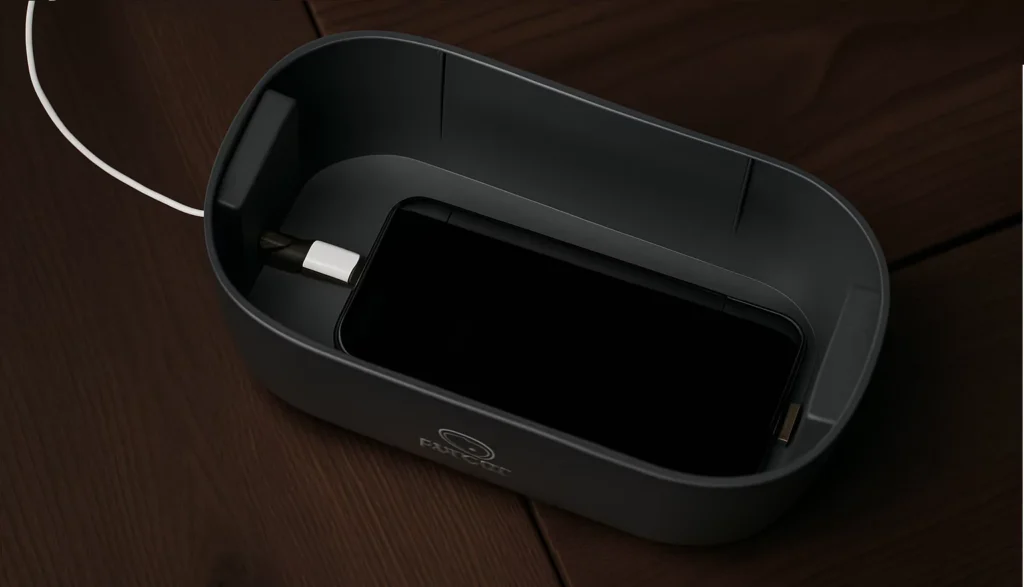
The charging slot was a key feature, allowing me to charge my phone overnight while it was locked.
Week 2: Reality Hits
By week two, the novelty wore off, and my real habits emerged. The override code’s location on the bottom of the box became a real test of willpower. I also ran into the “overstuffing” issue, which was easily solved but frustrating in the moment. The most surprising discovery? My family started using it for their own devices.
Week 3: The True Test
Week three is where habits stick or break. For me, using the Mindsight had become surprisingly natural. Fortress Mode became less intimidating and more of a powerful commitment tool. The battery performance remained solid, and the box showed almost no signs of wear.
Mindsight Lock Box: Pros and Cons
For those looking for a quick summary, here are the key advantages and disadvantages I found after three weeks of daily use.
What I Liked (Pros)
- ✅ The Opaque Design: This can’t be overstated. Not seeing your phone makes a massive psychological difference compared to transparent lock boxes. When you can’t see the glowing screen, the urge fades much faster.
- ✅ Charging Capability: Being able to charge while locked eliminates the “my phone needs to charge” excuse. The cable management is smart, with small slots that keep cables tidy without compromising security.
- ✅ Three-Mode Flexibility: Different situations call for different levels of commitment. Family dinner? Lockbox mode. Deep work? Standard mode. Breaking a bad habit? Fortress mode.
- ✅ Great for Families: It genuinely holds 3-4 phones, depending on cases. I’ve fit two phones and a gaming controller simultaneously.
- ✅ Price Point: At around $40, it is a good price. You’re paying for convenience and psychology, not complex technology.
What I Didn’t Like (Cons)
- ❌ Override Code Location: Printing the code on the bottom is a major design flaw for the target audience. Anyone with willpower issues will eventually flip that box over.
- ❌ No Emergency Contact Features: Unlike some competitors, there’s no way to receive calls in an emergency when using Fortress mode. This could be a dealbreaker for parents or caregivers.
- ❌ Timer Cancellation Window: The 15-second countdown after setting a timer is a double-edged sword. It prevents accidental locks but also provides a last-second escape route.
- ❌ Size Constraints: While it holds multiple phones, tablets are a no-go. The internal dimensions are limiting for larger devices.
Real-World Results: The Numbers
Let’s talk measurable impact. Before the Mindsight, my average daily screen time was 4 hours and 47 minutes. After three weeks of consistent use, that dropped to 2 hours and 23 minutes.
That’s a reduction of 2 hours and 24 minutes daily. Over three weeks, that’s nearly 50 hours of reclaimed time. My sleep and focus also improved measurably.
Who This Lock Box Actually Works For
The Mindsight timed lock box is most effective for:
- Student: If you’re a student needing a simple tool for study sessions.
- The Routine-Oriented: People who can build habits around using the box consistently see the best results.
- Moderate Screen Time Addicts: If you’re spending 3-6 hours daily on your phone, this tool can create meaningful change. Extreme cases might need more intervention.
- Family-Focused Users: Households wanting to create phone-free zones and shared digital boundaries get multiple benefits from one device.
Who Should Skip It
Those with critical emergency contact needs, frequent travelers, people with severe addiction, and budget-conscious buyers might want to consider other options.
The Verdict After 3 Weeks
Here’s the bottom line: the Mindsight Timed Lock Box does exactly what it promises, but your success depends entirely on your commitment.
It’s not a magic cure. It’s a tool that makes good choices easier and bad choices harder. The physical commitment creates a mental barrier that software can’t match.
Rating: 4.2/5 – An effective, well-built, and surprisingly habit-forming tool, with a few design quirks that prevent perfection.
Is it worth the money? If you’ve tried digital solutions and failed, yes. For a broader look at the competition, see our complete guide to The 9 Best Phone Lock Box Timers.